Your Site Ranks on Google. But AI Systems Don't Know You Exist.

The Visibility Gap That's Costing You Traffic (And How to Close It)
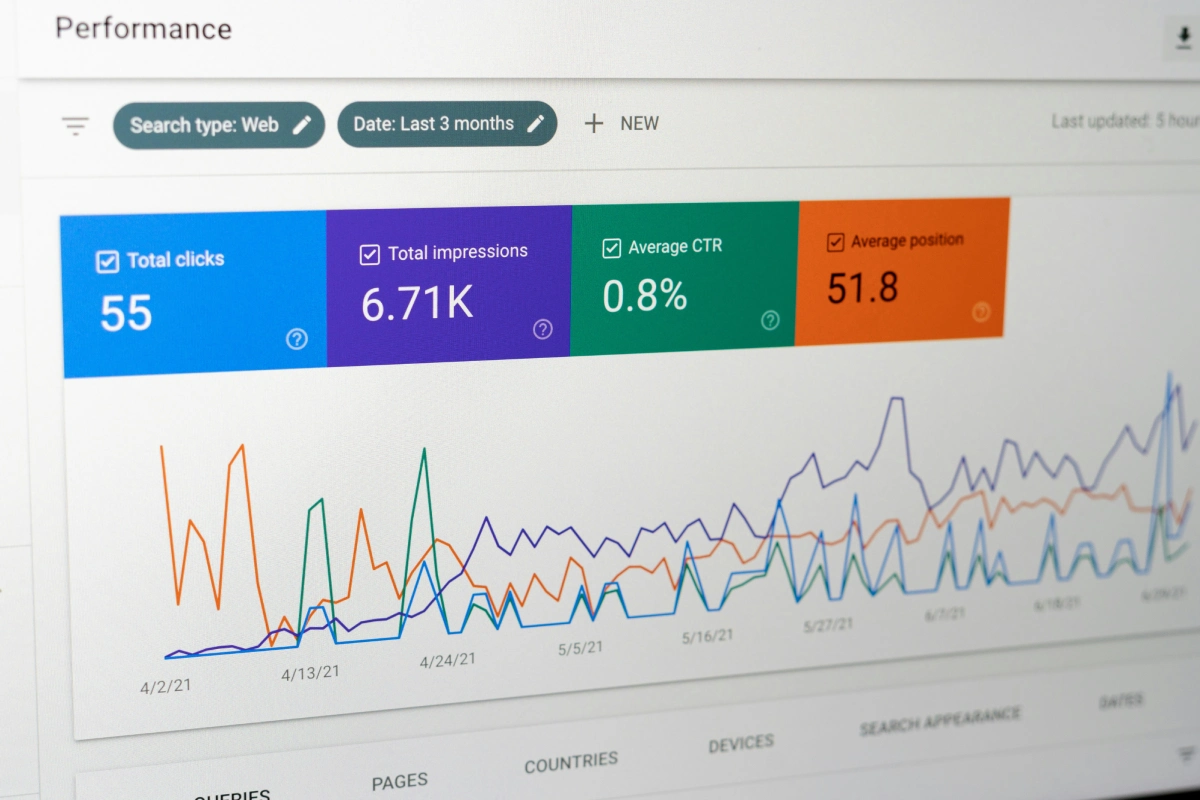
Your website ranks on page one of Google for your target keywords. Traffic is steady. You're getting clicks. Everything looks good from a traditional SEO perspective.
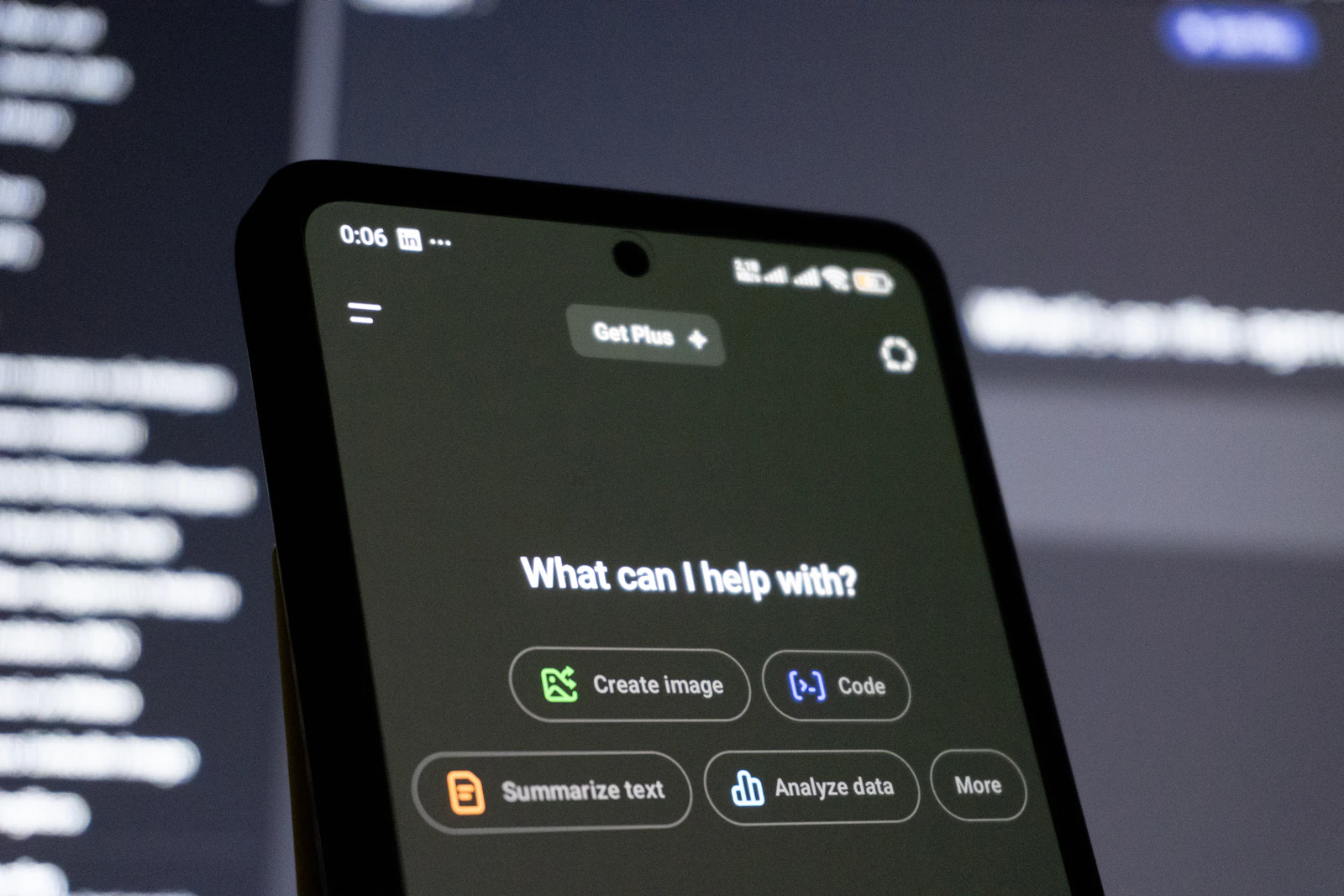
But when someone asks Claude about your industry, your site doesn't show up. When they search Perplexity, your content isn't cited. When they use Google's AI Overviews, you're invisible.
This is the 2026 visibility gap, and most websites have it.
Here's why it matters. Claude has hundreds of millions of users. Perplexity processes over 100 million queries per month. Google's AI Overviews are appearing in search results for the majority of queries.
Your Google ranking doesn't guarantee you'll be cited by any of them.
The Data Behind the Gap
The overlap between top Google links and AI-cited sources has dropped from around 70% to below 20%. That gap is growing as AI systems develop their own preferences for which sources to cite.
In other words: ranking on Google and being cited by AI are increasingly separate things.
When someone asks Claude "what's the best CRM for SMBs," the response synthesizes information from multiple sources and names specific brands. Your brand either gets cited, or it doesn't.
If it does, you've just been introduced to someone researching with high intent. The AI essentially endorsed you. If it doesn't, a competitor got that visibility, and you never knew it happened.
Why Google Rankings Don't Equal AI Citations
Google's algorithm ranks pages based on backlinks, keyword relevance, content quality, and user experience signals.
AI citation systems work differently. AI systems need to clearly understand who you are, what you do, and why you're credible. That's a different set of signals entirely.
A site can rank on Google because it has strong backlinks and good keyword optimization. But if AI systems can't clearly understand what your business actually does, if your entity clarity is weak, they won't confidently cite you.
Example: a site might rank for "WordPress developer" because it has good backlinks. But if the site doesn't clearly state who you are (company name, mission), what you do (specific services, not generic "web development"), and why you're credible (experience, case studies, social proof), then Claude, Perplexity, and other AI systems won't confidently recommend you.
The Real Impact of Being Cited
AI-referred traffic converts significantly better than traditional organic search traffic, with some B2B teams reporting conversion rates several times higher than standard organic visits.
Why? Because the user has already been pre-qualified by the AI. When Claude says "this brand is good for X," the user trusts that recommendation.
You're not just missing traffic. You're missing pre-qualified traffic that converts better than almost anything else you're running.
What Determines AI Citations
Based on brands successfully getting cited across Claude, Perplexity, Google Gemini, and other systems, five signals matter most.
1. Entity Clarity
Can AI systems clearly understand who you are and what you do?
- Clear mission statement on the homepage
- Specific services (not "web development" but "headless WordPress and Next.js development")
- An About page that explains your niche
- Schema markup (Organization schema, Business schema)
2. Structured Data
Does your site present information in a way AI can parse?
- Schema markup (FAQPage, Article, Service schema)
- Clear H1, H2, H3 hierarchy
- Metadata (descriptions, Open Graph tags)
- Knowledge graph optimization
3. Content Authority
Do you have original research, data, or expertise?
- Case studies with results
- Data you've collected or analyzed
- Expert insights, not just regurgitated content
- Thought leadership pieces
4. Freshness
Does your content feel current and maintained?
- Recent publication dates
- Regular updates to existing content
- An active blog or publication schedule
- A visible sign of an ongoing business, not an abandoned one
5. Credibility Signals
Why should AI systems trust you?
- Third-party authority: credible coverage and digital PR raise citation odds
- Social proof (testimonials, case studies, client logos)
- Professional design and user experience
- E-E-A-T: experience, expertise, authoritativeness, trustworthiness
How to Check If You Have the Visibility Gap
Step 1: Identify a keyword you rank for on Google. Example: "headless WordPress development."
Step 2: Ask AI systems directly. Ask Claude, Perplexity, and Google Gemini: "What are the best [your industry] providers or experts?" Or: "How do I find a [your service]?"
Step 3: Check if your site appears. Did any of the AI systems cite your site? If not, you have the gap.
Step 4: Check what ranked instead. Which competitors got cited? What do their sites have that yours doesn't?
This is the fastest way to see your actual AI visibility.
We built an audit tool that measures exactly this. It checks entity clarity (does your site clearly explain what you do?), schema markup completeness (is structured data in place?), authority signals (do you have proof points?), and crawlability for AI (can Claude and Perplexity even access your site?).
The Priority Order If You're Ranking But Not Cited
1. Fix Entity Clarity (Quick, High-Impact)
Make sure your homepage clearly states who you are (company name), what you do (specific service, not generic terms), who you serve (target customer), and why you're credible (proof points).
2. Add Schema Markup (Technical, High-Impact)
Use Schema.org vocabulary: Organization schema (who you are), Service schema (what you offer), FAQPage schema (answers to common questions), and LocalBusiness schema if you're location-based.
3. Improve Content Freshness (Ongoing)
Update old blog posts with new data, publish regularly, refresh case studies with recent results, and update your About page with recent achievements.
4. Build Authority (Long-Term)
Invest in original research or data, case studies with specific results, expert quotes or perspectives, and third-party press or mentions.
5. Run the Audit (Measure and Monitor)
Run a free scan at audit.jupitragency.com, review the specific recommendations, and track improvements over time.
The Window Is Closing
Right now, in most industries, the competition for AI citations is low. Most companies haven't even started optimizing.
But that window is closing. Adobe's acquisition of Semrush put a price tag on Generative Engine Optimization as a discipline, and that signals where the market is moving.
Once all your competitors are optimized for AI citations, becoming the cited source will cost more and take longer.
The time to optimize is now, while the field is still wide open.
Next Steps
- Test your AI visibility yourself. Ask Claude, Perplexity, and Gemini directly: "What are the best [your industry]?" See if you get cited, and see who does.
- Run a free audit. Two minutes, no email. See your AI Visibility Score and specific gaps.
- Start with entity clarity. Make sure your homepage clearly explains who you are and what you do.
- Add schema markup. Organization schema on your homepage, Service schema on your service pages, FAQPage schema for Q&A content.
- Track progress. Re-run the audit in 30 days, see if your score improves, and monitor AI citations manually by asking the AI directly.
If the audit shows gaps and you want expert guidance implementing fixes, that's exactly what our GEO and AI search optimization service is for. We'll review your specific situation and recommend the fastest path to better AI visibility.
FAQ
If I'm ranking on Google, why do I need AI visibility?
Google rankings are still important, but traditional search volume is projected to decline as queries shift to conversational AI interfaces. Being cited by AI is becoming as important as Google ranking.
Will AI visibility hurt my Google rankings?
No. Everything you do to improve AI visibility, like better schema, clearer entity definition, and more authority, also helps Google. You're optimizing for both at the same time.
Do I need to change my website to get AI citations?
Usually not a major rebuild. Most improvements are adding schema markup, clarifying your homepage, and updating content freshness. Small changes, big impact.
How long does it take to start getting AI citations?
Most teams see measurable improvements in AI citation frequency within 4 to 8 weeks of deploying proper GEO infrastructure, but it depends on how much work is needed.
Which AI system should I optimize for?
All of them. But if you had to prioritize: Claude for the most rigorous citations, Perplexity for the highest volume, and Google AI Overviews for the most reach.
Can I game AI citations like people game Google?
No. AI systems detect and downweight low-quality tactics like keyword stuffing, fake reviews, and unedited AI-generated content. Stick to legitimate signals.
Is this what SEOs call GEO?
Yes. Generative Engine Optimization (GEO) is the practice of optimizing content to be cited by AI search engines, including Claude, Perplexity, Google AI Overviews, and Gemini. GEO is the umbrella term for this work.
If I run the free audit, will you try to upsell me?
No. The audit is free and complete. We'll show you exactly what's missing and how to fix it. If you want professional help implementing the fixes, that's available, but the audit stands on its own.
Related Reading
- "Your SEO Rankings Are Fine But Traffic Dropped 40%. Here's Why" — We covered Google AI Overviews and how they're shifting traffic away from traditional rankings.
- "AI Visibility Is Now a Fourth Ranking Factor" — A deeper look at why AI citations matter as much as Google ranking in 2026, plus how to run your own audit.
- "WordPress 7.0 Changed Everything" — If you're considering a headless WordPress rebuild, AI visibility should be part of the evaluation.
- GEO & AI Search Optimization — AI visibility is one component of modern search strategy. See how we approach it holistically.
Ready to see what AI systems say about your business right now? Contact us and we'll walk through your specific gaps.